
In a perfect world, every family would move in July. The kids would say goodbye to their friends in June, spend the summer settling in, and walk into their new school on the first day with everyone else.
Real life rarely cooperates. A job starts in January. A house closes in October. A lease ends in March. We move families across Hartford County and Western Massachusetts all year long, and a lot of those moves land right in the middle of a semester.
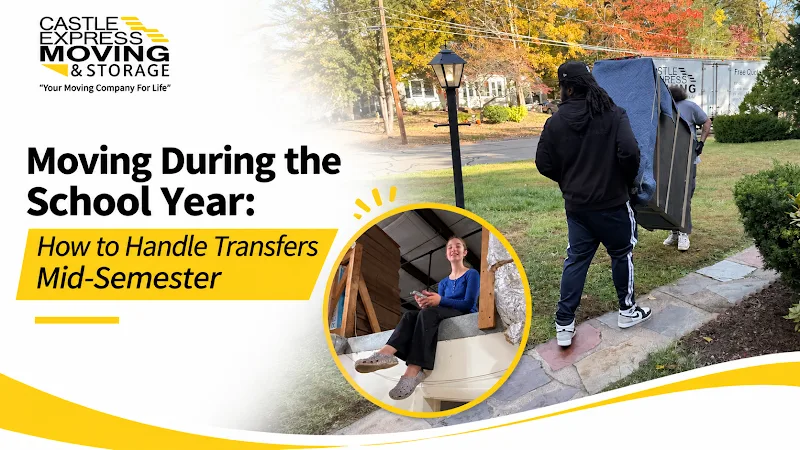
The good news: a mid-year school transfer is very manageable when you plan it in the right order. Here is how we walk families through it, from the first call to the school office to the first morning at the new bus stop.
Is It Better to Move Mid-Semester or Wait?
There is no single right answer, but here is how we think about it with families:
- Natural breaks are your friend. Thanksgiving week, winter break, February vacation, and April vacation all give kids a few days to settle before they are back in a classroom. If you have any flexibility in your closing or lease date, aim for one of these windows.
- The end of a marking period is the next best thing. Grades are closed out, teachers have a clean record to pass along, and your child starts fresh with a new grading cycle.
- Age matters. Younger kids usually adapt quickly. High school students juggling AP courses, varsity sports, or a senior year have more to lose, so the timing deserves more weight.
As a bonus, the school year overlaps with the slower part of our calendar. Our guide to the best time to move in Hartford County breaks down how fall and winter dates often mean more availability and better rates than the summer rush.
Ask the Current District If Your Child Can Finish the Year
Before you assume your child has to switch schools the day the truck pulls away, call your current district. Many Connecticut boards of education have a non-resident policy that lets a student who moves out of town finish the school year, usually with a written request and superintendent approval. For example, Hamden's policy allows students who move after February 1 to finish the year, and makes exceptions at any point in the year for kindergarten, 6th, 8th, and 12th graders.
Every district sets its own rules, so ask specifically about:
- The cutoff date, if there is one
- Whether tuition applies
- Transportation, which in many districts becomes your responsibility once you live out of town
If you are only moving a town or two over, say from Enfield to Suffield, finishing the year in the old school while the rest of life moves forward can be the least disruptive option.
How School Records Transfer in Connecticut and Massachusetts
This is the part parents worry about most, and it is more automatic than most people expect.
In Connecticut, state law (C.G.S. § 10-220h) puts the burden on the schools, not on you. Once your child enrolls in the new district, that district has to notify the old one within two business days, and the old district then has ten days to send the education records over.
In Massachusetts, the student records regulations (603 CMR 23.07) allow a school your child is transferring into to access the student record without separate parental consent, as long as the sending school has given notice that it forwards records to new schools.
That said, we always tell families to carry their own folder. Records requests get stuck, and you do not want your child sitting in the wrong math class for three weeks while paperwork catches up. Before your last day, ask the current school for copies of:
- The most recent report card and current grades in each class
- Standardized test scores
- Immunization and health records
- Any IEP, 504 plan, or evaluation reports
- Course descriptions or syllabi for high schoolers, so credits line up
Enroll in the New District Before Moving Day
Most districts let you start registration before you physically move in. Call the central registration office, not the individual school, and ask what they need. In our experience, the list almost always includes:
- Proof of residency, such as a signed lease, purchase and sale agreement, or closing documents
- Your child's birth certificate
- Immunization records
- A parent or guardian photo ID
Here is a timing tip that comes straight from our dispatch desk: book your movers around the registration date, not the other way around. If the new school wants your child in the building on a Monday, a Friday or Saturday move gives the family a weekend to unpack the essentials. Our Connecticut moving checklist lays out the full week-by-week timeline so the school steps do not get lost in the shuffle.
If you are coming from out of state, our local mover's guide to relocating to Connecticut and our rundown of the best towns in Hartford County for families can help you narrow down where to register in the first place.
Special Education: Protecting Your Child's IEP or 504 Plan
If your child has an IEP, federal law is on your side. When a student with a disability transfers mid-year, the new district must provide a free appropriate public education, including services comparable to the existing IEP, until it adopts that plan or develops a new one. Moves from another state may trigger a new evaluation.
What that means in practice:
- Call the new district's special education or pupil services office as soon as you know your move date, not after you arrive.
- Hand-carry a copy of the IEP and latest progress reports to registration.
- Ask when the new team plans to meet, and request a transition meeting if one is not offered.
The same goes for 504 plans, English learner services, and gifted programs. A phone call two weeks early saves a lot of catch-up later.
Military Families: The Interstate Compact
If you are relocating on military orders, your kids are covered by the Interstate Compact on Educational Opportunity for Military Children. It is designed to smooth exactly this situation, with provisions for records transfer, course placement, and graduation requirements. Ask the new school for its military family liaison, and let us know about your report date so we can schedule around it.
Keep Kids on Track While the House Is in Boxes
The weeks before a move are when homework tends to disappear under packing paper. A few habits make a real difference:
- Pack the schoolwork last. Give each child a "school box" with backpacks, chargers, Chromebooks, sports gear, and current assignments. Label it "DO NOT PACK" or ride it in the car.
- Protect the routine. Same bedtime, same homework time, same breakfast, even if dinner is pizza on the floor.
- Tell teachers early. A heads-up two weeks out lets them wrap up projects, send work home, and write a note for the new teacher.
- Let them say goodbye. A last lunch with friends or a swapped phone number matters more to a 10-year-old than any spreadsheet.
For more on handling the emotional side, our post on moving with kids and keeping the family less stressed covers the questions children actually ask and how to answer them.
How We Help Families Moving Mid-Semester
A mid-year move is really two moves at once: the house, and the school year. Our job is to take as much of the first one off your plate as possible so you can focus on the second.
- Packing while you are at work and school. Our full-service packing team can pack the house during the school day. For families short on time, Princess Packing™ handles a complete pre-move pack with all materials included.
- Storage to bridge the gap. If your closing date and the school calendar do not line up, our climate-controlled storage in Enfield holds your belongings until the new house is ready, so the kids can start school on time no matter what the paperwork says.
- Flexible scheduling. We schedule local moves around school pickup and weekend starts, and plan long-distance moves so beds and school supplies come off the truck first.
- Kids' rooms set up first. On delivery day, we place the bedroom furniture and reassemble beds early, so the first night in the new home feels like home.
We have been helping families settle into new towns since 2011, and a well-planned school-year move is one of the most rewarding jobs we do.
Frequently Asked Questions
Is it bad for kids to change schools in the middle of the year?
Not necessarily. Most children adjust within a few weeks, especially when the move lines up with a school break or the end of a marking period. Preparation, a steady routine, and early contact with teachers make the biggest difference.
How long does it take for school records to transfer in Connecticut?
Under C.G.S. § 10-220h, the new district notifies your old district within two business days of enrollment, and the old district has ten days to send the records. Bringing your own copies avoids delays.
Can my child finish the school year in our old district after we move?
Often, yes, but it depends on the district. Many Connecticut districts allow it with a written request and superintendent approval, sometimes only after a set date. Transportation may become your responsibility.
What is the best time of year to move with school-age kids?
Summer is the easiest for school, but winter break, February vacation, and April vacation are strong mid-year options. They also tend to fall during slower moving months, which can mean better availability.
Do I need proof of my new address to enroll before moving?
Most districts accept a signed lease, purchase and sale agreement, or closing documents as proof of residency. Call the district's registration office to confirm what it accepts.
Planning a School-Year Move?
If you are juggling a closing date, a new school, and a moving truck, let us take the truck part off your list. Request a free estimate or call us at 1-888-553-4503. We typically respond within 20 minutes, and we will help you build a move date that works around the school calendar, not against it.