
Most moves are a mix of boxes, beds and sofas. Then there's the one item everybody quietly worries about. The gun safe that went into the basement before the stairs were finished. Grandma's baby grand. A framed painting that's worth more than the car. A pool table, a hot tub or a piece of commercial equipment that took a forklift to bring in.
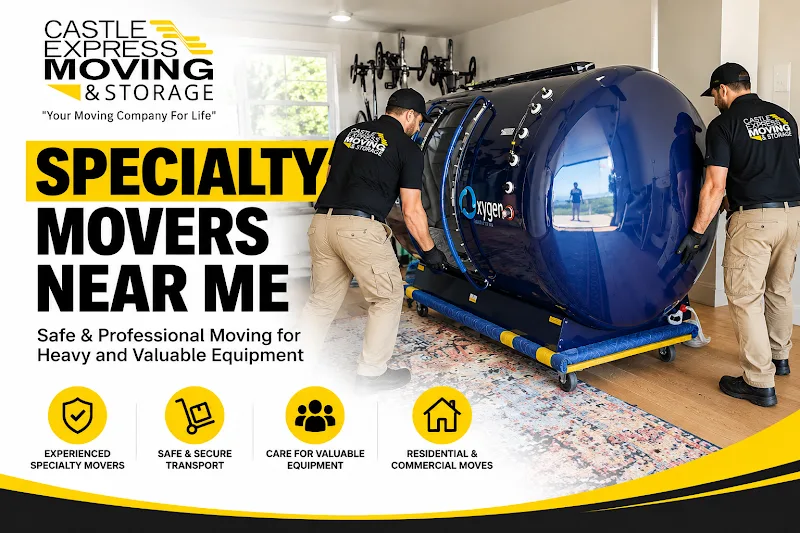
When you search "specialty movers near me," almost every result says it can handle heavy and valuable items. Far fewer have the gear, the crew experience and the planning process to do it without damaging the item, the house or somebody's back.
We've been moving homes and businesses out of Enfield since 2011, and specialty items are a regular part of our week. This is the checklist we'd use if we were the ones hiring a mover for something that can't be replaced. It works whether you're in Enfield, West Hartford, Glastonbury or across the line in Springfield.
What Counts as a Specialty Move?
A specialty move is any item that's too heavy, too fragile, too awkward or too valuable to treat like regular furniture. In our work, that usually means:
- Pianos, from uprights and digital pianos to baby grands, concert grands and organs
- Gun safes and fire safes, including ones that have to come up out of a basement
- Fine art, sculptures and framed pieces
- Antique furniture
- Pool tables and hot tubs
- Heavy machinery and commercial equipment
- Medical and wellness equipment, such as hyperbaric oxygen chambers
If you have one of these, it shapes the whole move. The crew size, the truck, the equipment and sometimes the date all depend on it. That's why it's worth choosing your mover with the hardest item in mind, not the easiest.
Step 1: Build a Simple Profile of Each Item
Before you call anyone, write down what you know about each specialty item. Movers can only quote what they understand, and the more specific you are, the faster you'll spot who really knows this work.
For every item, note:
- What it is. Make, model and type. "Piano" isn't enough. An upright and a concert grand are two very different jobs.
- Approximate size and weight. Check the manufacturer's paperwork or website if you have it.
- Where it sits now. Floor level, the room, and every doorway, hallway, turn and stair between it and the street.
- Where it's going. The same details at the new place, plus exactly where you want it placed.
- Value. A rough replacement value, plus any appraisals or receipts.
- Condition. Take clear, dated photos from every angle before the move. They protect you and the mover.
- Special instructions. Anything the manufacturer says about moving it, like locking mechanisms, draining or disassembly.
Weight is the big one. For reference, the pianos we move typically fall in these ranges:
- Upright. Typical weight: 300 to 500 lbs.
- Baby grand. Typical weight: 500 to 600 lbs.
- Grand. Typical weight: 600 to 1,200 lbs.
Hyperbaric chambers can run from 500 to over 2,000 pounds, which is why we wrote a full guide on how to move a hyperbaric oxygen chamber. Numbers like these decide how many people show up and what equipment comes off the truck.
Step 2: Separate True Specialty Movers From Everyone Else
Your "near me" results will mix three kinds of companies, and only one of them is what you want.
- General movers who will "try" a heavy item with the same two-person crew and standard dolly they use for dressers.
- Brokers who take your booking and pass the job to another company. The FMCSA explains that a moving broker does not own trucks or employ movers. For a specialty item, that means the people who promised to protect your piano or safe may never be the people carrying it.
- Full-service movers with a dedicated specialty process, their own crews, their own trucks and the right equipment for heavy and fragile items.
Look for a company that lists specialty moving as a real service with its own page, not a line at the bottom of a checklist. You can see how we lay ours out on our specialty moving page, and our piano moving page goes deeper on pianos specifically.
Step 3: Ask What Equipment They'll Bring
Specialty moving is as much about tools as it is about strength. A crew that's done this many times will answer quickly and specifically. A crew that hasn't will say "we'll figure it out."
Ask each mover what they'll use for your item. On our specialty jobs, the standard kit includes:
- Piano boards or skids that a piano is wrapped, padded and secured to
- Heavy-duty dollies rated for safes and dense equipment
- Stair climbers for moving heavy items up and down steps under control
- Custom crating materials for fine art and oversized fragile pieces
- Padding, wrapping and straps so the item is protected on the dolly and locked in place in the truck
For the heaviest jobs, especially items on upper floors or in tight spaces, the answer may be crane and rigging. That can mean lifting with a crane or chain hoist and bringing the item in through a window opening, over a balcony or through a roof access point. If your item could need that, ask early, because it changes the plan and the price.
Then ask about crew size. For example, piano moves that involve stairs typically take four or five experienced movers on our team. If a company plans to send two people for a grand piano going up a flight of stairs, that's your answer.
Step 4: Insist on an Assessment of the Item and the Path
The FMCSA lists a mover that won't come see your belongings, or won't put the estimate in writing, as one of its moving fraud red flags. With specialty items, a walkthrough isn't only about price. It's about whether the move is safe to do at all.
Every specialty move we do starts with a pre-move assessment. We look at the item, the path and every obstacle along the way. A good assessment should cover:
- Doorway widths and door swings, including whether doors need to come off their hinges
- Hallway turns, landings and ceiling height on stairways
- The condition of stairs and floors that will carry the weight
- Thresholds, railings and anything that needs to be protected or removed
- Outdoor access: steps, slopes, walkways, the driveway and where the truck can park
- The same path at the destination, plus the exact spot the item will go
Ask the estimator what could go wrong and what the plan is if it does. Experienced specialty movers have usually seen the tricky staircase or the tight basement turn before, and they'll tell you how they handle it.
Step 5: Get Clear on Coverage Before You Sign
This is the step most people skip, and it's the one that matters most if something goes wrong.
For interstate moves, the FMCSA explains that released value protection, the no-cost option, makes the mover responsible for no more than 60 cents per pound per article. Do that math on a valuable item and the gap is obvious. A 25-pound framed painting would be covered for $15, no matter what it's worth.
Full value protection makes the mover responsible for the replacement value of lost or damaged goods. There's an important catch for valuable items, though. Under federal rules, a mover can limit its liability for items worth more than $100 per pound unless you specifically list them on the shipping documents. Fine art, collectibles and certain antiques can easily cross that line.
What to do:
- Ask each mover to explain its coverage options in writing.
- List every high-value item on the paperwork before move day.
- Check what your homeowners or renters policy covers during a move.
- For very valuable pieces, ask about getting an appraisal before the move.
- Be wary of any company that says everything is "fully covered," which the FMCSA also flags as a warning sign.
Our guide on how to read a moving estimate in Connecticut walks through where coverage shows up in the fine print.
Step 6: Ask Item-Specific Questions
Generic questions get generic answers. Here's what we'd ask about the items we see most often.
Pianos
- How will you wrap and secure it, and is it going onto a piano board?
- How many movers will you send, and does that change with stairs?
- Is the truck climate-controlled?
- Can a grand piano go up our stairs? (Often yes, if it's properly turned and secured, but only an assessment can confirm it.)
Plan on a tuning after the move. We recommend waiting two to three weeks so the piano can settle into its new environment first. For the full picture, read our piano moving guide for Connecticut and our breakdown of piano moving costs in Hartford County.
Gun Safes and Fire Safes
- Have you moved a safe out of a basement before, and what equipment did you use?
- Do you need the safe emptied before the move?
- How will you protect the stairs, floors and doorframes?
- Can you place it exactly where it needs to go, including tight closets or corners?
Basement safe extraction is one of the most common specialty requests we get, and it's one where crew experience shows quickly.
Fine Art, Sculptures and Antiques
- Will you build a custom crate, or use padding and wrapping?
- How do you handle framed glass, gilded frames or fragile finishes?
- Who packs the piece, and is it the same team that moves it?
If you're packing smaller valuables yourself, our tips on how to pack fragile items for a move will help. For whole-house packing done by professionals, see our packing services or our boutique Princess Packing option.
Pool Tables and Hot Tubs
- Will you disassemble and reassemble the item, or is that handled by a separate technician?
- What prep do you need from us before move day?
- How will you get it across the yard, deck or driveway without damaging either?
Heavy Machinery, Commercial and Medical Equipment
- Have you moved this type of equipment before?
- Will it need rigging, a crane or a liftgate?
- Who disconnects and reconnects it, you or the manufacturer's technician?
- Can you work after hours so the move doesn't disrupt the business?
For businesses, we often fold specialty items into a larger commercial move. Our guide on how to choose commercial movers in CT and MA covers the business side in more detail, and our post on minimizing downtime during an office move helps if equipment is part of a larger relocation.
It's also worth knowing what no mover can put on a truck. Our post on 7 things movers won't move covers the usual list.
Step 7: Verify Licenses and a Real Local Base
A specialty item is the last thing you want in the hands of an unlicensed or out-of-area operator. Check credentials before you go any further.
- Federal registration. Any mover with a USDOT number can be looked up on the FMCSA's company snapshot tool.
- Connecticut. The Connecticut Department of Consumer Protection explains that movers operating within the state are regulated by the Connecticut Department of Transportation and need the proper state certificate or permit.
- A real address. The FMCSA warns about movers with no local address and about a rental truck arriving instead of a marked company truck. Look the address up yourself.
Our credentials are on every page of our site: USDOT 2307446, MC-990616 and CT Permit C-1768. We run a fleet of five trucks out of a 5,000 square foot facility at 4 Niblick Rd, Unit A in Enfield. From there, we handle specialty moves across Hartford County and Western Massachusetts, including Simsbury, Avon, Wethersfield, Longmeadow and West Springfield. See the full list on our service areas page.
For a step-by-step look at checking a mover's credentials, read our guide to moving scams in Connecticut and how to verify a license.
Step 8: Plan for Storage and Timing
Specialty items don't always go straight from one home to the next. A closing date slips, a renovation runs long or an estate is still being settled. When that happens, where the item waits matters as much as how it's moved.
Pianos, antiques and artwork don't do well in a hot garage or a damp unit. Ask whether the mover has its own climate-controlled storage or subcontracts it to someone else. Our facility stays between 55 and 85 degrees with regulated humidity year-round, and your first month of storage is free when it's part of your move. See the details on our storage offer page and learn more about the benefits of climate-controlled storage.
On timing, give yourself a cushion. For a standalone piano move, we recommend booking one to two weeks ahead. If the specialty item is part of a full household or long-distance move, book earlier. Our guide to the best time to move in Connecticut can help you pick a window.
Step 9: Read Reviews for Specialty Jobs Specifically
A high rating is a good start. What you really want is proof the company has moved items like yours.
- Search reviews for words like "piano," "safe," "antique" or "pool table."
- Look at volume over time. Hundreds of reviews over many years tell you more than a handful from last month.
- Read how the owner responds to the occasional complaint.
- Ask for a reference from a customer with a similar item.
We hold a 4.9-star rating across more than 200 Google reviews and an A+ rating with the Better Business Bureau. You can read what our customers say on our reviews page.
Red Flags at a Glance
Keep looking if a specialty mover:
- Quotes a price over the phone without seeing the item or the path
- Won't put the estimate or coverage options in writing
- Plans to send a two-person crew for a heavy item on stairs
- Can't tell you what equipment they'll use
- Has no license numbers you can look up
- Has no real local address
- Says everything is "fully covered"
- Asks for cash or a large deposit up front
- Shows up in a rental truck instead of a marked company truck
For more questions to put to any mover, see our 8 questions to ask a moving company before you book.
Frequently Asked Questions
How do I find good specialty movers near me?
Start by writing down what each item is, how heavy it is, what it's worth and the path it has to travel at both ends. Then shortlist local companies that own their trucks and offer specialty moving as a dedicated service. Verify licenses, insist on an in-person assessment and get the estimate and coverage options in writing.
What items need a specialty mover?
Pianos, gun safes and fire safes, fine art and sculptures, antique furniture, pool tables, hot tubs, heavy machinery and medical equipment such as hyperbaric chambers all usually need specialty handling. In general, if an item is unusually heavy, fragile, awkward or valuable, it's worth hiring a mover with the right equipment and experience.
How much does it cost to move a piano locally?
On our team, local piano moves typically range from $300 to $800, depending on the type of piano, stairs, carry distance and how complex the route is. Grand pianos and multi-story moves cost more. We give a free estimate after a walkthrough.
Can movers get a safe out of a basement?
Yes, with the right crew and equipment. We handle basement safe extractions using heavy-duty dollies, stair climbers and specialized crews. An assessment of the stairs and path comes first.
Is my valuable item covered if it's damaged during a move?
It depends on the coverage you choose. Under the FMCSA's released value option, a mover is only responsible for up to 60 cents per pound per article. With full value protection, the mover is responsible for replacement value, but it can limit liability for items worth more than $100 per pound unless you list them on the shipping documents. Ask every mover to explain its options in writing.
Put Us on Your Shortlist
Castle Express is family-owned by Joe Caronna, who started the company in 2011. We're not a franchise and we're not a broker. Our own crews handle every move, including the heavy and valuable pieces that need extra planning, from our Enfield home base.
If you're comparing specialty movers near you, we'd love to take a look at your item. Learn more about our team, explore our specialty moving services, or request your free estimate. You can also call us at 1-888-553-4503.
Every move with us helps a neighbor, too. We give $5 from every move to local food assistance. Read more on our giving back page.