
Every office move has two jobs: getting the new space ready and emptying the old one. Most businesses plan the first job down to the outlet. The second one, deciding what happens to the desks, chairs, and filing cabinets that are *not* coming along, usually gets handled the week before the lease ends. That is when it gets expensive.
We have been running commercial moves across Connecticut and Western Massachusetts since 2011, and leftover furniture is one of the most common last-minute headaches we see. A landlord wants the space broom-clean. The new office has a different layout. Half the cubicles do not fit. Suddenly there is a room full of furniture with nowhere to go.
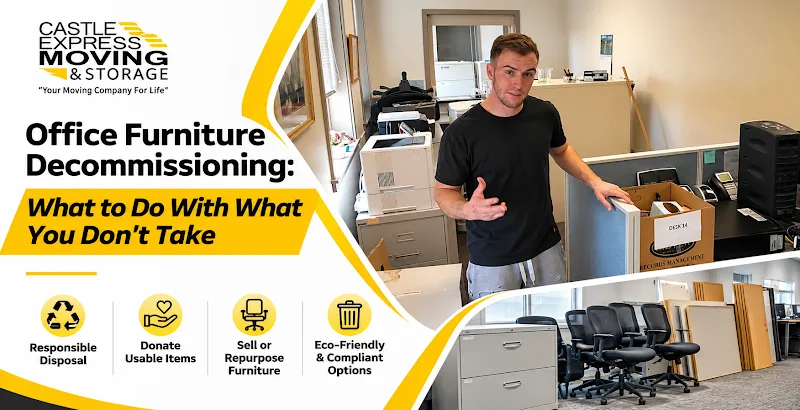
That process has a name: office furniture decommissioning. It simply means taking furniture out of service and getting it out of the building responsibly, whether that is resale, donation, recycling, storage, or disposal. Here is how we walk our commercial clients through it.
Start with an inventory: move it, keep it, or let it go
Before you can decide where furniture goes, you need to know what you have. We recommend walking the office with a floor plan of the new space in hand and tagging every piece into one of three groups:
- Moving. It fits the new layout, it is in good shape, and someone will use it.
- Holding. You might need it later, for growth, a second location, or a remodel that is not finished yet.
- Leaving. It does not fit, it is worn out, or it is cheaper to replace than to move.
Use colored stickers or labels so the crew can see your decisions at a glance on move day. The same labeling system we describe in our office relocation checklist works here too.
A quick gut check for the "leaving" pile: if a piece costs more in labor to disassemble, wrap, and reassemble than it would cost to replace, it probably should not make the trip. Every item you cut also lowers your moving bill. It is the same logic we lay out in how to declutter before a move, just at office scale. And it is one reason commercial moves cost more than residential ones: there is simply more to handle.
Six things to do with office furniture you're not taking
Once you know what is staying behind, it usually falls into one of these paths. Most offices end up using two or three of them.
- Resell: Best for name-brand task chairs, systems furniture, and newer desks. Allow 4 to 8 weeks. Used-furniture dealers pay far less than retail, and buyers often want it picked up fast.
- Donate: Best for usable desks, chairs, tables, and shelving. Allow 3 to 6 weeks. Charities set their own acceptance rules and pickup schedules.
- Recycle: Best for metal filing cabinets, steel frames, and broken pieces. Allow 2 to 4 weeks. Pieces may need to be broken down by material.
- Store: Best for furniture you will need again soon. Can be arranged in days. There is a monthly cost, and climate control matters for wood and upholstery.
- Give to employees: Best for small items, lamps, and side chairs. Allow 1 to 2 weeks. Set clear rules and a pickup deadline.
- Dispose: For damaged, stained, or broken items. Can be arranged in days, but it is the last resort and usually the costliest per piece.
1. Resell what still has value
Well-known ergonomic chairs and modern systems furniture can still bring back real money. Local used-office-furniture dealers will sometimes buy whole lots, but expect offers well below what you paid. Start early: buyers move on their timeline, not your lease's.
2. Donate to nonprofits, schools, and community groups
Usable desks and chairs can help a local nonprofit, school, or start-up. Call ahead, because many organizations limit what they accept and when they can pick up. Ask for a donation receipt for your records and talk to your accountant about how it applies to your business. Giving back is close to our hearts, too; you can read about the causes we support.
3. Recycle what can't be reused
Steel filing cabinets, metal desk frames, and many chair bases are recyclable. Some recyclers want items separated by material, so ask before you load anything. If keeping furniture out of the landfill matters to your company, our guide to eco-friendly moving in Connecticut has more ideas.
4. Store it until you need it
If you are growing, opening a second location, or waiting on a buildout, storing furniture is often cheaper than buying new later. We keep furniture at our climate-controlled storage facility in Enfield, which protects wood veneers, laminates, and upholstery from humidity swings. If you're unsure whether it's worth it, see the benefits of climate-controlled storage.
5. Offer it to your team
Employees often love a free desk chair or bookshelf for a home office. Keep it simple: post a list, set a firm pickup date, and have people sign a quick release. Whatever is unclaimed goes to the next option.
6. Dispose of what's left, responsibly
Some furniture really is at the end of its life. Make sure whoever hauls it is properly licensed and disposes of it legally. Just as with any moving vendor, it pays to verify a company's license before you hire it.
Check your lease, then work backward from move-out day
Your lease decides the deadline, so read it before you book anything. Many commercial leases require the space to be returned empty and in a specific condition, and leaving furniture behind can mean cleanout charges or a smaller deposit refund. Look for:
- The surrender date and any condition requirements
- Whether built-in or landlord-owned furniture must stay
- Building rules for elevators, loading docks, and after-hours work
- Certificate of insurance (COI) requirements for vendors
Then build a simple timeline:
- 8 to 12 weeks out: Inventory and tag furniture. Contact resellers and donation partners.
- 4 to 6 weeks out: Confirm pickups, book storage, and schedule your movers. Peak season fills up fast, so plan ahead as we explain in corporate move planning for peak season.
- 1 to 2 weeks out: Employee giveaways close. Recycling and disposal get scheduled for whatever is left.
- Move week: Moving furniture goes first, then storage, then decommissioned items, so the crew never loads the wrong desk.
- After move-out: Walk the empty space with your landlord and take photos.
Sequencing matters. If decommissioning happens on the same night as the move, it should not slow down getting your team working again. Our guide on minimizing downtime during an office move covers how we keep the two jobs from colliding.
How we help with decommissioning during your move
We are not a furniture liquidator, and we will never pretend to be one. What we do well is the physical work and the coordination, so that the furniture you are keeping, storing, and letting go all ends up in the right place on the right day. On a typical commercial job, we can:
- Walk the space with you and help sort the move, hold, and leave piles before we quote
- Disassemble and remove furniture, including cubicles and systems furniture
- Deliver pieces to storage at our Enfield warehouse, or to a donation or recycling drop-off you've arranged
- Pack files and equipment with our commercial packing services
- Handle heavy or unusual items, from safes to machinery, through our specialty moving team (see how we approach heavy equipment moves in New Britain)
- Work nights and weekends so your business stays open
Because storage and moving happen under one roof with our moving and storage service, you deal with one crew, one schedule, and one invoice. We serve businesses throughout Hartford County and Western Massachusetts, including Hartford, Windsor, and our hometown of Enfield. See all of our service areas.
Still comparing companies? Here is how to choose commercial movers in CT and MA, and how to read a moving estimate so that removal and storage costs are spelled out up front.
Frequently Asked Questions
What does office furniture decommissioning mean?
It is the process of taking office furniture out of service and removing it from a space, through resale, donation, recycling, storage, or disposal, usually during an office move, downsizing, or lease exit.
How early should we start planning?
We suggest 8 to 12 weeks before move-out. Resale and donation take the longest to arrange, and pickups often depend on the buyer's or charity's schedule.
Can movers take furniture we aren't keeping?
In many cases, yes. We can disassemble and remove furniture, take it to storage, or deliver it to a donation or recycling location you've arranged. Tell us during the estimate so it's included in your quote.
Is it cheaper to move old office furniture or replace it?
It depends on the piece. Cubicles and large conference tables take a lot of labor to take apart and rebuild, so replacing worn ones is often cheaper. Quality chairs and solid desks are usually worth moving.
Can we store office furniture short term?
Yes. Our climate-controlled storage in Enfield works well for furniture you will need again after a buildout, renovation, or expansion.
What can't movers take?
Hazardous materials and a few other items can't go on a moving truck. Our list of things movers won't move explains each one.
Let's plan the whole move, including what stays behind
The furniture you leave behind deserves as much planning as the furniture you take. When you settle it early, you avoid cleanout fees, protect your deposit, and keep move week focused on getting your team back to work.
If you're planning an office move in Connecticut or Western Massachusetts, request a free estimate or call us at 1-888-553-4503. We'll walk the space with you and build a plan for every piece, whether it's moving, staying in storage, or heading out the door. You can also see what other business owners say in our customer reviews.